Designing for Connection
Share

Addressing the Challenges of Community-Based Healthcare Facilities
Excerpted from Medical Construction & Design
Community hospitals face a growing design dilemma on how to deliver cutting-edge care while honoring the familiar character and identity that patients associate with trust and comfort. Facilities can play an important role in conveying both progress and continuity, especially in smaller towns where aesthetics and local values run deep.
The need to bridge modern clinical expectations with historic charm creates unique challenges in community-based healthcare environments. This dual imperative—to modernize without alienating—demands careful attention to materials, layouts, and public-facing spaces that reinforce both technological advancement and emotional connection.
Balancing Heritage with Innovation
One of the key issues in community healthcare design is navigating the tension between preserving tradition and embracing innovation. Many community hospitals are long-standing institutions with architectural features that reflect local heritage. At the same time, patients increasingly expect advanced care environments that look and feel modern.
A thoughtful approach includes retaining recognizable architectural elements while upgrading facilities for clinical efficiency. For example, project team stakeholders may incorporate materials and forms reminiscent of regional landmarks or legacy buildings while embedding contemporary infrastructure within. Careful planning ensures additions such as bed towers, procedure platforms, and emergency departments feel cohesive with existing structures, promoting functionality and familiarity.
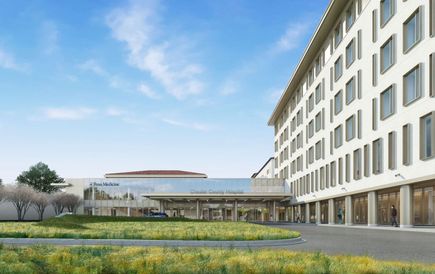
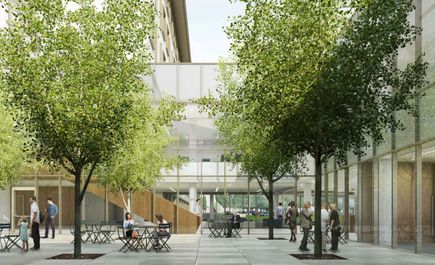
The recent expansion of Penn Medicine Chester County Hospital serves as a compelling case study. The project team expanded the campus with a new procedural platform and patient tower that integrates seamlessly with its historic structure, preserving the classic Mediterranean character influenced by the original donor Pierre DuPont, while delivering modern surgical capabilities

Penn Medicine Chester County Hospital’s expanded campus integrates seamlessly with its historic structure, preserving the classic Mediterranean character, while delivering modern surgical capabilities.
Designing for Emergency Readiness, Community Growth
With rising patient volumes and more frequent critical care scenarios, another pressing issue for community hospitals is the capacity and flexibility of emergency departments. Healthcare organizations are increasingly looking to meet rising demand while also preparing for evolving service needs. Designing trauma-ready environments—with rooftop helipads, secure screening, and adaptable treatment bays—requires advanced planning and stakeholder engagement.
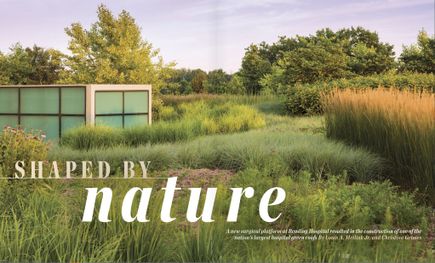
Tower Health’s Reading HealthPlex for Advanced Surgical & Patient Care serves Reading, the fourth most populous city in Pennsylvania. To meet growing demand for emergency services, it expanded its emergency department and added a new helipad to improve connectivity to the Level 1 Trauma Center.
Key design tools, such as mock-ups of transport elevators or trauma bays, allow project team stakeholders to simulate emergency workflows before construction begins. Incorporating design foresight helps ensure operational readiness and resilience, particularly in rural or suburban communities facing demographic shifts.
Fostering Healing Through the Built Environment
Community hospitals are also navigating how to create spaces that genuinely support healing. Beyond clinical performance, patient and staff well-being hinges on environments that reduce stress and foster comfort. Elements like biophilic design, daylight access, natural materials, and intuitive wayfinding significantly affect how patients perceive their care.
Modern hospital design increasingly embraces individual treatment rooms, decentralized nursing stations, and privacy-enhancing layouts to meet these emotional and psychological needs. Impactful updates like replacing curtained bays with enclosed spaces or introducing green roofs, contribute to better experiences for both patients and healthcare professionals.
Integrating Sustainability as a Design Imperative
Sustainability is no longer optional; it is a critical response to climate concerns, energy costs, and community expectations. Projects targeting certifications like LEED reflect a broader shift toward environmentally responsible healthcare infrastructure. Features such as green roofs, native plantings, and stormwater management systems not only improve environmental performance but also create therapeutic landscapes that benefit patients and staff.
The design of the April Sampson Cancer Center in Lincoln, Nebraska maximizes the natural features of its site, a rolling landscape that includes meadows, woods, and a pond. The project incorporates water management elements that reduce the environmental impact of runoff and welcome wildlife such as birds and butterflies. The benefits extend beyond the cancer center; the grounds are open to the community, with walking paths and art installations. By providing a community amenity, the building helps foster trust and a deeper connection with community members.

The design of the April Sampson Cancer Center in Lincoln, Nebraska maximizes the natural features of its site. The rolling landscape includes meadows, woods and a pond.
Maximizing Operational Efficiency Through Strategic Planning
Designing for operational efficiency is one of the most complex challenges in healthcare. In community settings, spatial limitations and budget constraints make planning even more critical. Project team stakeholders are tasked with optimizing clinical adjacencies in ways that also support seamless staff workflows. At Chester County Hospital, the strategic reorganization of procedural areas and streamlined perioperative spaces was key to improving efficiency without expanding the overall footprint. For example, aligning clean core operating rooms with hybrid interventional spaces on a shared procedural platform can eliminate redundancies. Similarly, grouping pre- and post-op rooms into functional “neighborhoods” supports staff coordination and improves patient flow. Emergency departments benefit from layouts where imaging and diagnostics are immediately accessible, minimizing patient transport and wait times.
Community Access and Human-Centered Design
Access to care is not just about proximity; it is also about the quality and dignity of the spaces patients enter. Designing community hospitals with empathy helps honor the deeply personal nature of healthcare encounters. Human-centered design considers every touchpoint: entrances, lobbies, signage, and waiting areas.
Engaging stakeholders such as staff, patients, families, and advisory councils during the planning process ensures that design decisions reflect real needs. Employing tools like full-scale mock-ups and virtual models fosters alignment and gives end-users a voice. At Chester County Hospital, full-scale mock-ups of patient rooms and nurse stations were instrumental in gathering feedback from clinical staff and patient advisory councils, ensuring the new environments prioritized operational flow and emotional comfort.
Designing healthcare spaces that foster community connections is ultimately about respect for heritage, `sustainability, and equitable access—through thoughtful, empathetic design. As healthcare delivery continues to evolve, community-based facilities have an opportunity to lead by creating environments that heal, uplift, and bring people together.

At Chester County Hospital, full scale mock-ups of patient rooms and burse stations were instrumental in gathering feedback from clinical staff and patient advisory councils, ensuring the new environments prioritized operational flow and emotional comfort.
Tagged
Share
related insights
Open-Door Planning for Penn Medicine Chester County Hospital’s Expansion
- Press|
- Architecture|
- Healthcare|
Reading HealthPlex October Cover Story in Healthcare Design
- Press|
- Architecture|
- Healthcare|

Ballinger’s April Sampson Cancer Center Wins Top Healthcare Environment Award
- Awards|
- Architecture|
- Healthcare|
Penn Medicine Chester County Hospital Celebrates Expansion Opening
- Events|
- Architecture|
- Healthcare|


